


If you’ve been in a car wreck, it’s normal to be confused when it comes to dealing with property damage caused by the accident. Financial responsibility for property damage is determined by who was at fault when the accident occurred. Who’s responsible for paying for it? Do you file a claim with your insurance company or the other driver’s? Should you call a lawyer for car accidents?
Our car accident and personal injury law firm, with offices in Lafayette and Metairie, has helped countless car accident victims fight for fair compensation after car wrecks, so we know that most people in this situation have plenty of questions about the process. Establishing financial responsibility begins as soon as the accident occurs, triggering insurance and legal procedures to determine liability and compensation. This article should answer most of your basic questions about property damage procedures following an auto accident – if you have a question not answered here, feel free to let us know
Key Takeaways
- The at-fault driver pays for property damage, but your compensation can be reduced if you share fault under Louisiana’s comparative negligence law
- You have three main options: file with the at-fault driver’s insurance, use your own coverage, or pursue legal action if coverage falls short
- Insurance coverage matters more than people think; collision, liability, and uninsured motorist coverage all impact what you actually recover
- Documentation is everything; photos, repair estimates, and reports directly affect how much compensation you receive
- Low settlements are common, and negotiating (or involving an attorney) is often necessary to get fair compensation
What is Considered Property Damage?
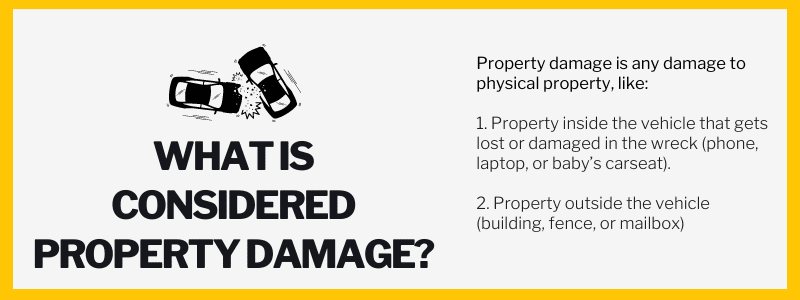
As the term implies, property damage is any damage to physical property, including any damage in a car, such as to the vehicle itself or to items inside. This might include your vehicle, but it can also include property like:
- Property inside the vehicle that gets lost or damaged in the wreck (phone, laptop, child safety seats; note that some states require insurance to cover replacement of child safety seats if they were in use during the accident)
- Property outside the vehicle (building, fence, or mailbox)
Property damage may also include repairs to vehicles and damage to personal items inside the car, as well as to buildings, fences, or utility poles.
When filing a claim, remember that property damage is separate from non-tangible things like medical bills, lost wages, or pain and suffering. If you’re unclear about what damages you might be entitled to, seek guidance from an experienced lawyer for car accidents who can help you itemize the damages you’ve suffered.
Understanding Insurance Policies
Understanding your car insurance policy is essential when you’re dealing with a car accident and need to file a property damage claim. Most car insurance policies include several types of coverage that can affect how your property damage is handled.
Liability insurance is the foundation of most policies and covers property damage you cause to others if you’re at fault in an accident. If you have collision coverage, it will pay for repairs to your own vehicle after a car accident, regardless of who was at fault, though you’ll need to pay your deductible. Comprehensive coverage protects you from property damage not caused by a collision, such as theft, vandalism, or natural disasters.
It’s important to review your car insurance policy to understand your coverage limits, deductibles, and any exclusions that might apply. Knowing these details can help you navigate the claims process more confidently and ensure you receive fair compensation for your property damage.
If you’re unsure about your insurance coverage or how to proceed with a property damage claim, your insurance provider or a knowledgeable attorney can help clarify your options and guide you through the process.
No Fault Insurance and State Laws
No fault insurance, often referred to as personal injury protection (PIP), is designed to cover medical expenses and lost wages for you and your passengers after a car accident, regardless of who caused the crash. However, it’s important to note that no fault insurance does not cover property damage to your vehicle or other personal property.
In no fault states, your own insurance company pays for your medical costs, but when it comes to property damage, the at fault driver’s property damage liability insurance is typically responsible for covering repairs or replacement. Louisiana, however, is an “at-fault” state; so, whichever driver is caused the damages is financially responsible.
State laws play a major role in how property damage claims are handled after a car accident. Some states require drivers to carry specific minimum amounts of liability insurance, while others have unique rules for resolving property damage claims.
Understanding your state’s insurance coverage requirements and property damage liability laws can help you better navigate the claims process and ensure you’re meeting all legal obligations. If you’re unsure about your state’s laws or how no fault insurance affects your property damage claim, consulting with a local attorney or your insurance company can provide valuable guidance.
Who is Responsible for Property Damage After a Car Wreck?
The responsible party for property damage in a car accident is determined by who the driver caused the accident. The at-fault driver is responsible for property damage after a car wreck, which means they’re obligated to pay compensation.
Determining liability is based on who the evidence shows was negligent, and negligence is the deciding factor in most states, even in no-fault states, the at-fault driver is still responsible for property damage. Identifying the responsible party is essential for establishing fault, pursuing claims, and seeking compensation.
However, if you’re in a car accident in Metairie or Lafayette, it’s worth knowing about Louisiana’s comparative negligence law, which says that the damages compensation you receive may be reduced if you’re found to be partly to blame for the accident. In most states, comparative negligence laws may apply, meaning that if both drivers are partially at fault, the compensation you can recover for damages is reduced by your percentage of blame.
How Can You Seek Compensation for Property Damage?
If your property has been damaged in a wreck, there are three ways you can pursue compensation: by filing an insurance claim with the at-fault driver’s insurance company, filing a claim with your own insurance, or taking legal action. If the at-fault driver does not have sufficient insurance coverage, you may need to file a claim with your own insurance or pursue legal action to recover the full amount of property damage. To file a property damage claim, you should report the accident to both your insurance company and the at-fault driver’s insurance company, providing necessary documentation such as police reports and repair estimates.
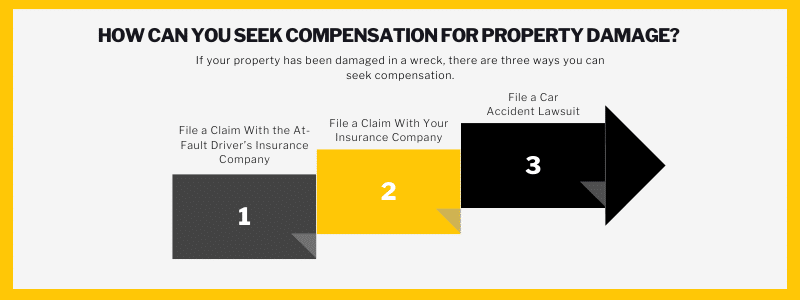
File a Claim With the At-Fault Driver’s Insurance Company
The state of Louisiana requires drivers to carry liability insurance, which pays for damages they may cause in an accident. If the at-fault driver has property damage liability insurance, you’ll usually file a claim with the other driver’s insurance company, using their auto insurance policy, for compensation. The at-fault driver’s property damage liability coverage is legally required in nearly every state to pay for the other party’s repairs. In fact, every state requires a minimum amount of property damage liability coverage for all drivers to ensure damages caused to others are covered.
File a Claim With Your Insurance Company
If the at-fault driver doesn’t have insurance or their insurance won’t cover the full amount of damages to your property, you may need to use your own insurance policy to file a collision claim with your insurance company. Collision coverage is a type of auto insurance that provides financial protection for vehicle repairs after an accident, regardless of who is at fault, up to the limits of the policy. Comprehensive coverage, another type of auto insurance, offers financial protection against damages to your vehicle caused by incidents that are not collision-related, such as theft or natural disasters.
In many states, if the at-fault driver does not have sufficient insurance to cover the damages, you may need to file a claim under your own collision coverage. However, any payment from your collision insurance will be minus your deductible.
Uninsured / underinsured motorist coverage is designed to cover the gaps between what the at-fault driver’s insurance will cover and the total amount of damages you’ve incurred. This can help you minimize financial losses after a wreck, no matter what the insurance or financial situation of the at-fault driver is.
File a Car Accident Lawsuit
Car accident lawsuits can be stressful and time-consuming, but if you’re unable to cover the expenses you’ve incurred from a car accident through the insurance companies involved, you may need to file a personal injury claim or a property damage lawsuit. Personal injury cases often involve both property damage and bodily injury, so if the accident caused injuries as well as property damage, a personal injury claim may be necessary, especially when insurance coverage is insufficient or unavailable. A local car accident or personal injury law firm will be familiar with your area’s laws and can help you understand your options and fight for what you’re owed, so you’re not just out of luck if an insurance company or driver doesn’t want to pay.
Increase Your Chances of Getting Compensation
What you do after a minor car accident can have a big impact on your chances of getting fair compensation. To increase your chances:
- Document everything at the accident scene, including photos of road conditions, the damaged vehicle, damages, other driver information, witness statements and contact information, and the police report.
- Gather repair estimates from repair shops, receipts for car repairs, and any rental car expenses incurred while your vehicle is being repaired.
- Familiarize yourself with the local laws and regulations (such as statute of limitations).
- Seek property appraisals and expert opinions.
- Get help from an experienced attorney familiar with local laws.
Insurance adjusters will review the police report, repair estimates, and all documentation to assess the damage to your vehicle and determine the appropriate compensation. Insurance companies determine fault by applying the laws of the state where the accident occurred and reviewing evidence such as police reports and witness statements. If your vehicle is declared a total loss, the insurance company will use the fair market value of your vehicle to determine your compensation.
Resolving Disputes and Negotiations
Disputes and negotiations are common when filing a property damage claim after a car accident. Insurance companies may offer settlements that don’t fully cover your losses, or there may be disagreements about the extent of the property damage or who is at fault. To protect your interests, it’s important to keep detailed records of all communications, repair estimates, and documentation related to your claim.
If you’re not satisfied with the insurance company’s offer, you have the right to negotiate for a fair settlement. This may involve providing additional evidence, such as photos, repair shop estimates, or expert opinions. In more complex cases, especially those involving comparative negligence or uninsured motorist coverage, you may benefit from legal representation to help you pursue fair compensation.
If negotiations stall, alternative dispute resolution methods like mediation or arbitration can help resolve the issue without going to court. By staying organized and informed throughout the claims process, you can increase your chances of achieving a fair outcome for your property damage claim.
 Let a Lawyer for Car Accidents Go to Bat for You
No matter how careful you are while on the road, sometimes bad accidents happen to good people. But you don’t have to pick up the pieces on your own – a knowledgeable lawyer for car accidents can walk you through the process so you don’t have to worry about the stress of settlement negotiations on top of everything that comes along with a wreck.
If you’ve been in a car accident in the Lafayette or Metairie area, don’t hesitate to contact the Law Offices of Blaine J. Barrilleaux to set up a free consultation.