



After decades of helping all types of clients, our injury lawyers have answered their share of questions about the legal process. One of the questions we hear pretty frequently is, “what is the difference between a severe catastrophic injuries lawyer and a catastrophic injuries attorney?” In the United States, people often use lawyer and attorney interchangeably, but there is a technical difference: a lawyer has graduated from law school, while an attorney has also passed the Bar Exam and can represent clients in court.
If you are comparing legal titles before hiring help for a catastrophic injury claim or another personal legal matter, that distinction can affect who is qualified to handle your case. Legal professionals have been around in some context for centuries, and are known by various terms around the globe, such as:
- Solicitor
- Barrister
- Esquire
- Advocate
- Counsel
Each one of these titles may have slightly different qualifications or duties depending on the country they practice in. Luckily, those of us in the States generally only have to worry about two terms: lawyers and attorneys – so let’s focus on where the terms came from, how they differ technically, why Americans often use them to mean the same thing, and how to choose the right legal professional for a catastrophic injury case.
The Origin of the Term “Lawyer”
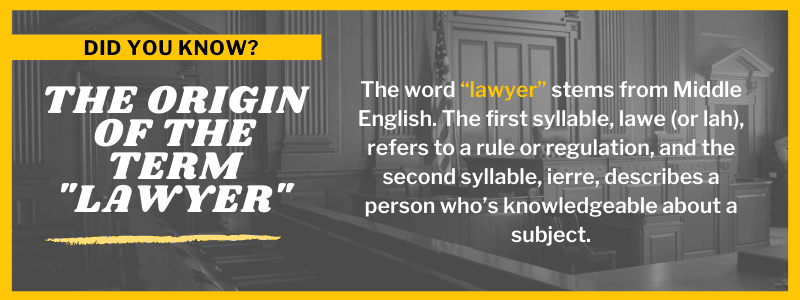
The word “lawyer” stems from Middle English and dates back to the 14th century.. The first syllable, lawe (or lah), refers to a rule or regulation, and the second syllable, ierre, describes a person who’s knowledgeable about a subject.
Even older than the Middle English word lawyer is the Old English word lahwita, which combines the lah from above with wita, a suffix meaning “a wise sage or counsellor”.
Even though these words are from hundreds of years ago, they still accurately describe what lawyers do for people today – use their legal knowledge to help people who aren’t familiar with the legal system. For example, a catastrophic injuries lawyer might advise a person on whether or not an injury case is worth the effort of pursuing given the circumstances surrounding it.
The Origin of the Term “Attorney”
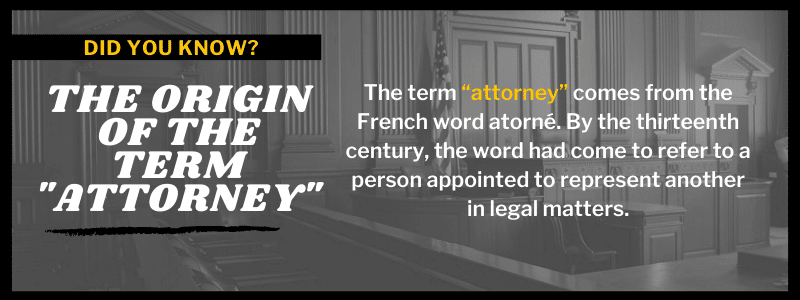
The term “attorney” traces back to the Latin attornatus and the French word atorné, which means “to turn over,” in the sense of turning something over to another person. By the thirteenth century, the word had come to refer to a person appointed to represent another in legal matters, and historically, an attorney at law referred to a licensed courtroom representative.
Centuries later, people still turn their legal issues over to knowledgeable attorneys who are able to use their experience to present their case effectively in court. A client might trust their personal injury lawyer, for instance, to help them clearly express their version of events in the hopes of increasing their chances of a fair judgement.
The Terms Lawyer and Attorney Can Be Used Interchangeably
In the United States, the terms “lawyer” and “attorney” are often used interchangeably, as they mean essentially the same thing in the eyes of the public. In everyday conversation, people use the terms interchangeably, and in many contexts they mean exactly the same thing. This is a common misconception among people from Louisiana. Technically, there is a slight distinction between them according to the American Bar Association.
Anyone who’s completed law school can technically call themselves a lawyer, but they cannot practice law unless they pass the Bar Exam. A lawyer has completed legal education, usually by earning a juris doctor from an accredited law school after a bachelor’s degree, but that alone does not confer legal authority. To prevent confusion, law school graduates who haven’t passed the bar generally use a title other than “lawyer.” Law graduates may conduct legal research in support roles, and in some positions they may provide legal consulting, but they are not authorized to provide binding legal counsel or represent clients in court unless licensed to practice law. A law school graduate might choose to do any number of things with their law degree:
- Teach law
- Settle disputes as an arbitrator
- Go into politics or law enforcement
- Law firm administration
- Help clients seek legal counsel
An attorney, on the other hand, is a lawyer who has not only completed legal education, but also meets licensing requirements and is licensed to practice law, which means they are authorized to act for clients in court proceedings, provide legal advice, and handle legal services:
- Has passed the Bar Exam
- Practices law in court
Not all lawyers are attorneys, and only attorneys can represent clients in court or handle courtroom advocacy.
There are multiple areas of practice that an attorney might specialize in, from injury settlements to employment law. Depending on the case, lawyers work as licensed attorneys may include preparing or reviewing draft legal documents and other legal documents, arguing motions, cross-examining witnesses, and handling matters such as criminal defense.
All of this said, if you’re looking for legal help and need someone to represent you in a legal case, you can search for a lawyer or an attorney, because:
- All attorneys are also lawyers
- Lawyers who aren’t attorneys (and therefore can’t represent you) usually use different titles
Blaine and his legal team are attorneys licensed by the Louisiana state bar. Licensed attorneys must remain in good standing with the state bar, follow ethical codes regulated by their state’s bar association, and complete continuing legal education to maintain licensure; both lawyers and attorneys must complete continuing legal education (CLE) hours where required to keep credentials current.
Court rules and state laws also govern who may hold themselves out in the legal profession using these legal terms, and in Texas falsely claiming that title can be a third-degree felony. That means they can help people seek legal action and even litigate on someone’s behalf in court.
Need Assistance from a Team of Lawyers or Attorneys?
If you’ve been searching the internet for the differences between lawyers and attorneys, there’s a good chance you’re seeking legal help. Before choosing an attorney make sure to consider your own personal preferences as choosing the right legal professional or a licensed attorney matters when you need formal legal advice.
Now that you know that “lawyer” and “attorney” are usually interchangeable, you can focus on finding a legal professional who specializes in different types of catastrophic injuries.
For example, maybe you need a lawyer because you were involved in a car accident, or perhaps you’re struggling to get a fair personal injury settlement from the insurance company after a slip and fall accident. In that case, you’ll want to find an experienced attorney at The Law Offices of Blaine J. Barrilleaux who can provide legal counsel and legal services for a catastrophic injury claim, with convenient locations to make getting help easier. Please contact us and we’ll be happy to provide a free consultation on your case.
Once an attorney-client relationship is formed, formal legal advice is generally protected by attorney-client privilege.